Search “Chichén Itzá tour” online and hundreds of options appear. Similar prices, similar photos, similar promises. The real difference between one tour and another rarely shows up in the product description — it shows up on the day itself.
This article explains what makes the Lakin Tours Itzá Experience different from the mass tours operating out of Cancún and the Riviera Maya, and why that difference matters more than it seems when planning a trip.
The Problem with Mass Tours to Chichén Itzá
Most Chichén Itzá tours sold from Cancún, Playa del Carmen or Riviera Maya cruise ships share the same model: late departure, large groups, tight schedules and unannounced stops at craft shops.
Late departure: tours leaving Cancún at 7:00 or 7:30 AM arrive at Chichén Itzá between 10:00 and 10:30. By that time, the site already has thousands of visitors. The heat is intense, the pathways are congested and photographing the structures without crowds in the frame becomes an exercise in patience rather than enjoyment.
Groups of 30, 40 or more people: with groups that size, the guide cannot maintain a real conversation with each participant. Explanations are necessarily surface-level and the pace of the tour is set by the group, not by individual interest.
High-traffic cenotes: some tours include cenotes that during peak hours receive hundreds of people simultaneously. Swimming in a cenote with background music and queues to enter the water has little in common with what most travelers imagine when they book.
Unannounced stops: it is common for low-price tours to include mandatory stops at craft shops where guides earn a sales commission. Those stops consume time that could be spent at the archaeological site or at the cenotes.
What Makes the Lakin Tours Itzá Experience Different
7:00 AM departure from Valladolid
Valladolid is less than 45 minutes from Chichén Itzá. Departing at 7:00 AM means arriving at opening time, before the groups from the coast show up. Those two hours of difference completely change the visit: fewer people, better light, cooler temperatures and the ability to move through the structures at a relaxed pace.
Maximum 10 people per group
With small groups, the guide can adapt the tour to the pace and interests of each participant. If someone wants to spend more time at the Observatory or ask specific questions about Maya astronomy, there is time for that. There is no group of 40 people waiting to move on.
Certified local guides, not agency intermediaries
Lakin Tours guides are natives of Valladolid and the surrounding region, with certified training in Maya history, archaeology and Yucatán jungle ecosystems. They are not guides hired by a Cancún travel agency who know the site from repeated visits: they are people who grew up surrounded by this culture and share that knowledge genuinely.
Three selected cenotes, not the most crowded ones
The cenote circuit of the Itzá Experience — Ik Kil, Xkekén and Samulá — is selected for the quality of the experience at each one, not for being the best-marketed. The three offer distinct characteristics: open cenote, cave cenote with stalactites and cave cenote with deep water. That variety is designed so that each stop feels different from the one before.
Local restaurant lunch, not a tourist buffet
The lunch included in the Itzá Experience is at a traditional Yucatecan restaurant, not a high-capacity buffet designed for mass groups. The difference in quality and authenticity is considerable. The cochinita pibil served at these local restaurants is prepared using techniques passed down through generations, with ingredients from producers in the area.
What Is Visited at Chichén Itzá
The guided tour covers the main structures of the site with explanations that go well beyond what any information sign says:
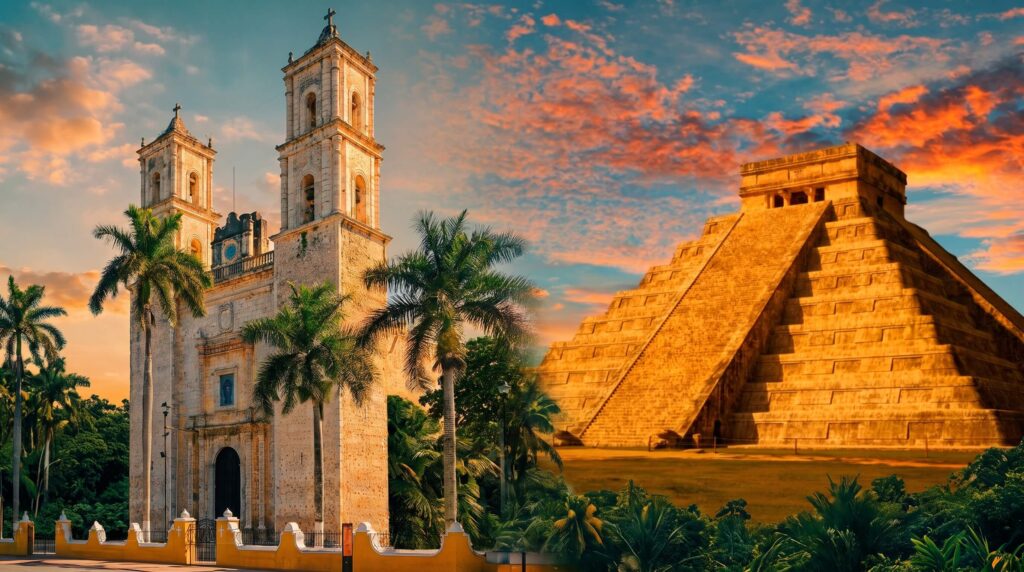
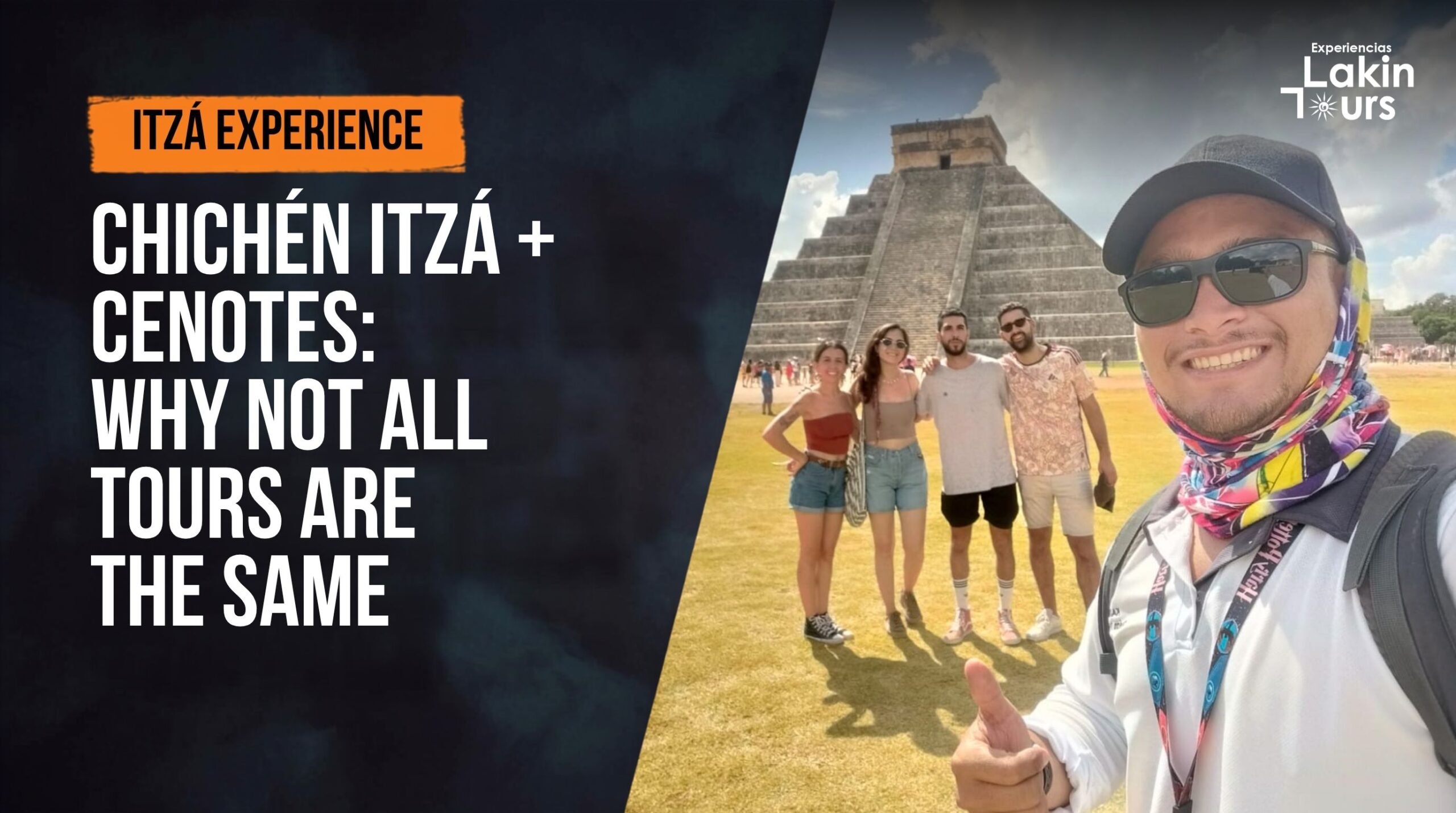
The Castillo de Kukulkán — the nine-tiered stepped pyramid that functions simultaneously as a temple, a solar clock and a calendar. The guide explains how each element of its design reflects a precise astronomical calculation.
The Great Ball Court — the largest court in all of Mesoamerica. Beyond its size, what surprises visitors is its acoustics: a whispered voice at one end is heard clearly at the other. The guide demonstrates this phenomenon on every visit.
The Temple of the Warriors and the Group of a Thousand Columns — a complex of structures that archaeologists have compared to Temple B at Tula, in Hidalgo, revealing the commercial and cultural connections Chichén Itzá maintained with other Mesoamerican civilizations.
The Observatory (El Caracol) — a cylindrical tower with windows aligned with the rising and setting points of Venus. It is one of the clearest pieces of evidence of the level of astronomical development reached by Maya civilization.
Cenote Xtoloc — the water source within the archaeological site where the Maya offered precious objects in ceremonies connected to water and rain deities. Swimming is not permitted, but standing at its edge with the historical context provided by the guide is one of the most meaningful stops on the tour.
The Three Cenotes on the Circuit
Ik Kil — a collapse-type cenote with a circular opening approximately 60 meters in diameter. It is accessed by a staircase carved into the rock that descends to water level. Tree roots hang from the edges almost to the surface. It is one of the most photographed cenotes in Yucatán and the view from the edge looking down fully justifies that reputation.
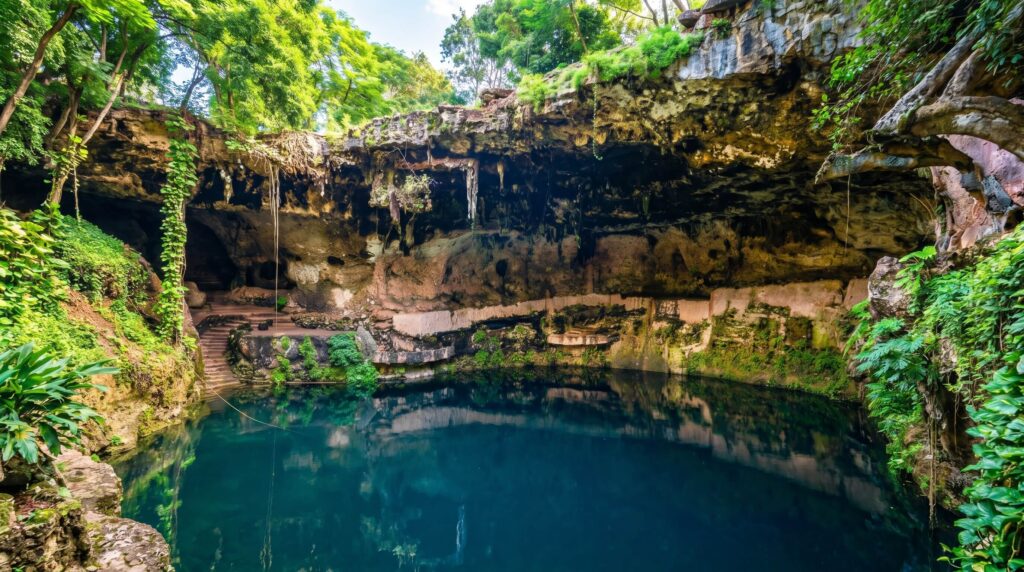
Xkekén — a cave cenote with a rock vault and a small circular opening in the ceiling through which a shaft of light enters and illuminates the water. The stalactites and rock formations inside create an atmosphere completely different from Ik Kil. The water is darker and the sensation of being inside an underground cavern is striking.
Samulá — also cave-type, a few meters from Xkekén. The water tends toward deep blue and the rock formations are more pronounced. Many visitors consider it the most photogenic of the three, for the quality of the light entering from above and the reflection it creates on the water.
All three cenotes allow swimming. The water maintains a constant temperature between 24 and 26 degrees Celsius throughout the year. Biodegradable sunscreen is required at all three — conventional sunscreen is not permitted.
Lunch: Real Yucatecan Cuisine
The lunch included in the Itzá Experience is a genuine pause, not a quick stop. The dishes served at the local restaurant are part of a culinary tradition that spans centuries and is as representative of Yucatán as the pyramids:
Cochinita pibil — pork marinated in achiote and sour orange, wrapped in banana leaves and slow-cooked in an underground earth oven called a pib. It is the most iconic dish of Yucatecan cuisine and in this area it is prepared using techniques passed down through generations.
Sopa de lima — chicken broth with sour lime juice, fried tortilla strips, shredded chicken and cilantro. A light, aromatic dish that is an essential part of any traditional Yucatecan meal.
Panuchos and salbutes — fried tortillas topped with black beans, chicken or cochinita, lettuce, tomato and pickled onion. They are the most popular street food in Yucatán and at local restaurants in the area they are served freshly made.
What Is Included in the Itzá Experience
✔ Transportation from Valladolid — round trip in an air-conditioned vehicle.
✔ Certified bilingual guide — Spanish and English, native of the region.
✔ Guided tour of Chichén Itzá — main and secondary zones of the site.
✔ Three cenotes — Ik Kil, Xkekén and Samulá.
✔ Lunch at a local restaurant — traditional Yucatecan cuisine.
✔ Water during the journey.
✔ Groups of maximum 10 people.
Not included: entrance to Chichén Itzá (~$700–800 MXN for international visitors), cenote entrance fees and personal expenses.
Who This Tour Is For
The Itzá Experience is ideal for travelers who value the quality of the experience over the lowest market price. It is the right choice for those who want to understand where they are standing, not just photograph it. For families who prefer a small group where children can ask questions. For couples looking for a memorable day without the feeling of being on a school field trip.
It is not the cheapest tour in Yucatán. It is the tour that those who do it remember most.
Frequently Asked Questions
How far in advance should a reservation be made?
Spots are limited to 10 people per departure. During high season (December to April and July to August), booking at least one week in advance is recommended. During low season, two or three days is usually sufficient.
Does the tour run every day?
Yes, Monday through Sunday, subject to availability. Confirming at the time of booking is recommended.
What languages does the guide speak?
Spanish and English. Mixed groups with speakers of both languages are common and the guide alternates between the two languages throughout the tour.
Can the tour be done in the rain?
Yes. Chichén Itzá remains open in light rain and swimming in the cenotes during rain is a pleasant experience. In the event of extreme weather conditions, the Lakin Tours team contacts participants in advance.
Is the tour suitable for older visitors or those with limited mobility?
The Chichén Itzá portion involves walking between 4 and 6 kilometers over uneven terrain. Visitors with limited mobility can participate by adjusting the pace and the zones visited. Consulting with the Lakin Tours team before booking to coordinate the details is recommended.