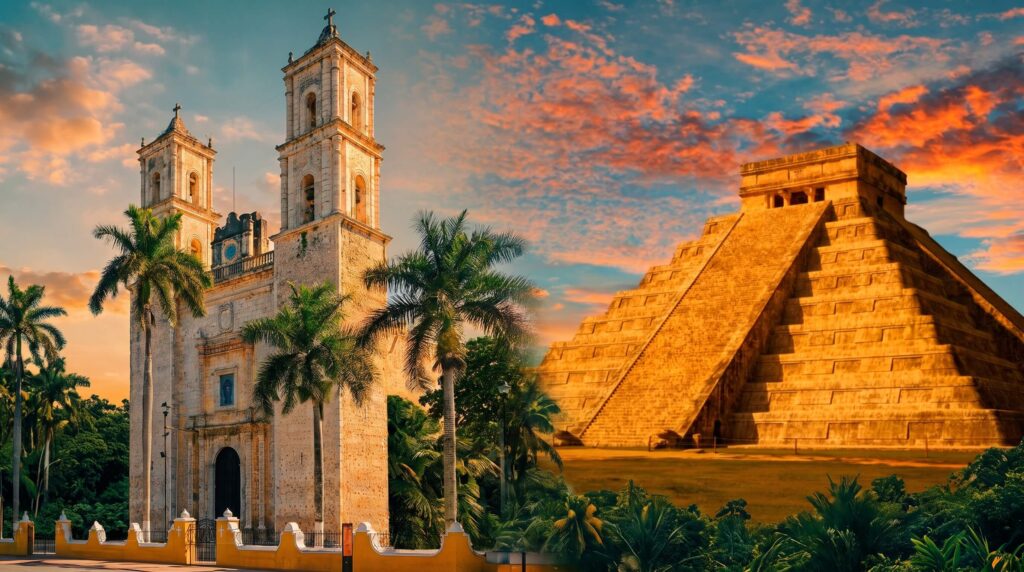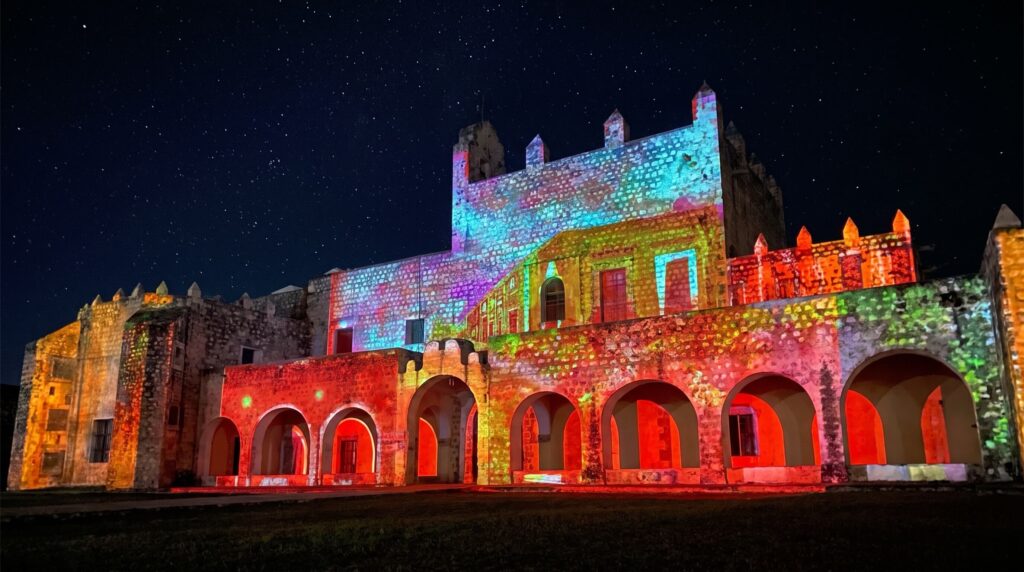
In the historic center of Valladolid there is a cenote that most travelers overlook simply because it is within walking distance of wherever they are staying. Cenote Zací is not on the outskirts of the city and does not require special transportation to reach. It is ten minutes on foot from the main square and yet it holds one of the most layered histories in the entire Maya region.
This guide covers what it is, what can be seen there, how to visit and why it deserves far more than a quick stop.
What Is Cenote Zací
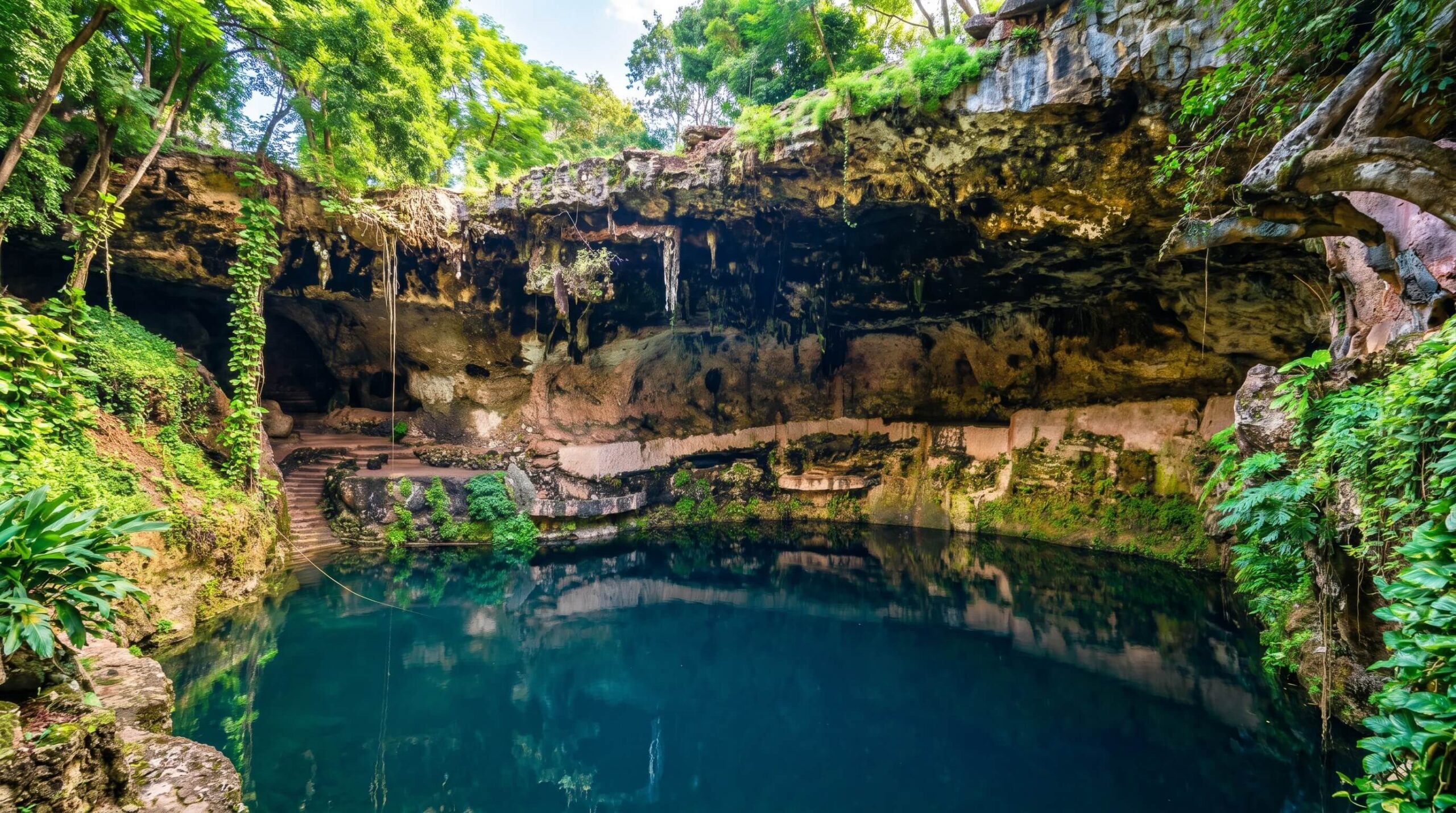
Cenote Zací is a semi-open cavern located in the urban center of Valladolid, Yucatán. Unlike jungle cenotes that require transportation and are surrounded by dense vegetation, Zací is a collapse-type cenote: a cavern whose ceiling fell in thousands of years ago, leaving a circular opening that now allows natural light to enter and provides a view of the sky from the bottom.
Its vertical limestone walls descend between 15 and 20 meters to reach the water surface, which in some areas exceeds 30 meters in depth. The combination of natural light, turquoise water, hanging roots and tropical vegetation growing along the edges creates a visual scene of unusual beauty for an attraction located in the middle of a city.
The Meaning of the Name: Zací and the Cupul Dynasty
In the Maya language, Zací means “White Hawk.” This was the original name of the pre-Hispanic city that existed in this territory before the Spanish arrived: Zací, capital of the powerful Cupul dynasty.
The Cupul were one of the most resilient Maya lineages on the Peninsula. When the Spanish came to found Valladolid in 1543, they found here an organized city with its own political structures and a deep understanding of the region’s natural resources. The cenote was not merely a water source: it was a sacred place connected to the deities of the underworld and a central point in the daily and ceremonial life of the community.
When the colonial city was built over the foundations of Zací, the cenote became the primary water supply for the first Spanish and Maya inhabitants of Valladolid. That dual function — sacred and utilitarian — defines the history of this place better than any tourist description could.
What Can Be Seen at Cenote Zací
The experience at Cenote Zací is primarily visual and cultural. From the observation platforms surrounding the edge of the cavern, visitors can appreciate:
The water surface: an intense turquoise color, with variations of blue and green depending on the time of day and the intensity of sunlight. In the early morning hours, when rays enter obliquely through the opening, the visual effect is particularly striking.
Local wildlife: Cenote Zací is home to swifts that nest in the cracks of the walls and bats that emerge at dusk. Both species are part of Yucatán’s cenote ecosystem and their presence is entirely natural. Watching the bats emerge in groups from the interior at sunset is one of the most distinctive natural spectacles in the city.
The vegetation: ferns, mosses, tree roots that descend along the walls to reach the water and tropical plants growing on the edges cover the limestone walls with layers of green that contrast with the white of the rock.
Platforms and viewpoints: the site has wooden and concrete structures from which the cenote can be safely observed at different heights and angles.
Can You Swim in Cenote Zací?
Yes. Cenote Zací has a designated swimming area with controlled access. Life jackets are available for rent on site, making it accessible for people who do not swim or who prefer to float and enjoy the atmosphere without venturing into the deeper areas.
Approximate entrance fee: $150 MXN per person (prices may vary; confirming before the visit is recommended).
Important requirement: conventional sunscreen and insect repellent are not permitted before entering the water. This protects the cenote’s aquatic ecosystem and the quality of the underground water. If swimming is planned, it is best to go in without any products applied, or to use certified biodegradable sunscreen.
Swimming hours: water access is available during the site’s operating hours. Going in the morning is recommended, when the light enters directly and temperatures are more comfortable for walking to the cenote.
How to Get to Cenote Zací
Cenote Zací is located on Calle 36, between Calles 37 and 39, in the historic center of Valladolid. From Parque Francisco Cantón Rosado — the city’s main square — it can be reached on foot in under 10 minutes by following Calle 39 eastward.
No transportation is needed. There is no need to leave the center. It is one of the few natural attractions in Yucatán that can be visited on foot from any hotel in the historic center of Valladolid.
When to Visit: the Best Time of Day
Morning (8:00 – 10:00 AM): light enters directly through the cenote’s opening and the effect on the water is spectacular. The atmosphere is calm, there are fewer visitors and temperatures are pleasant for walking.
Midday: the overhead light on the water creates intense reflections and the cenote is seen with great clarity from the viewpoints. This is the busiest time of day.
Late afternoon (5:00 – 6:30 PM): ideal for watching the bats emerge. The light shifts in tone and photographs take on a different, warmer and more dramatic quality.
Practical Tips for the Visit
Comfortable, grippy footwear — the wooden platforms and pathways around the cenote can be damp. Sandals without grip or smooth-soled shoes are best avoided.
Hat and water — the walk from the center is short but in the open air. In summer, the heat can be intense from early in the morning.
Charged camera or phone — the cenote offers a wide variety of photographic angles from the different viewpoints. It is worth taking the time to explore all of them.
If planning to swim, arrive without products on the skin — or use certified biodegradable sunscreen only.
Cash — entrance fees and life jacket rental are generally paid in cash.
Cenote Zací on Lakin Tours’ Morning Walking Tour
The Lakin Tours Morning Walking Tour includes a guided visit to the viewpoints of Cenote Zací as part of a broader route through the historic center of Valladolid. The tour departs at 9:30 in the morning and covers the most representative places in the city over two to three hours: the Church of San Servacio, the municipal market, the colonial streets and the cenote.
The difference between visiting the cenote alone and visiting it with a local guide is considerable. The history of the Cupul dynasty, the meaning of the name Zací, the relationship between the cenote and the founding of Valladolid and the details of the flora and fauna surrounding the site are all part of what the guide contributes to the visit — context that is rarely found on an information board.
Morning Walking Tour details:
Departure: 9:30 AM from the historic center of Valladolid.
Duration: approximately 2 to 3 hours.
Group size: maximum 10 people.
Languages: Spanish and English.
Cost: MX$150 per person, paid directly to the guide on the day of the tour.
Frequently Asked Questions
Is Cenote Zací open every day?
The site operates every day of the week. Confirming opening hours in advance is recommended, especially during the low season or on public holidays.
Is it safe for children?
Yes. The visit to the viewpoints is completely safe for children of any age. If children are going to swim, life jackets are available on site. Constant supervision in the water area is always recommended.
Can the cenote be photographed?
Yes, without any restrictions. There is no additional fee for bringing a camera.
Are there restaurants or services on site?
Cenote Zací has a small service area with food and drinks. For a more complete dining experience, Valladolid’s municipal market is a few minutes away on foot and offers a wide selection of traditional Yucatecan cuisine at local prices.
Does the cenote have artificial lighting?
No. The lighting is entirely natural, which means the visual experience varies depending on the time of day. This is part of what makes the place special.
Valladolid as a Base for Exploring Yucatán
Cenote Zací is just one of the reasons to stay more than one night in Valladolid. The city is the ideal base for visiting Chichén Itzá, Ek Balam, the cenotes of the Xibalbá circuit and the Río Lagartos reserve, home to the largest flamingo colony in Mexico.
Staying in Valladolid rather than on the coast is not only more affordable: it allows arriving earlier at archaeological sites, before the large tour groups, and experiencing a more authentic version of Yucatán that few visitors ever discover.
To arrange any activity from Valladolid, the Lakin Tours team is available on WhatsApp and responds within minutes.